


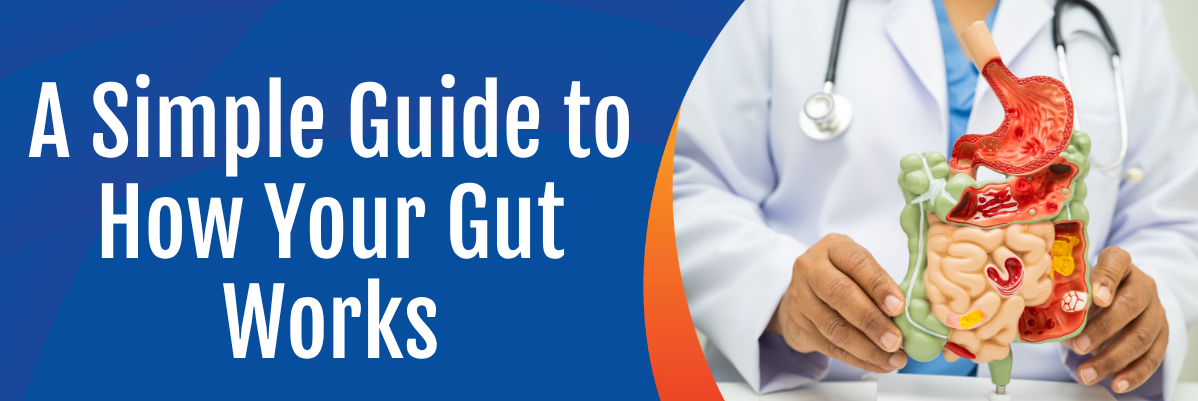
Every time you eat, your digestive system starts up like a production line in a factory. Unlike a typical assembly line that puts things together, your digestive tract works in reverse. It takes in a complex product, strips out all of the valuable resources and safely disposes of the rest. When every department is humming along, you don’t even notice it running. Let’s check out the factory floor to see what each organ actually does, station by station.
The Mouth
Food begins its journey the moment you take your first bite. You can think of your mouth as both the receiving bay and a shredder. Chewing your food breaks it down into smaller pieces while the saliva in your mouth coats the food with enzymes that further aid digestion.
The Esophagus
The food then slides down your esophagus with every swallow. Your esophagus is lined with two layers of muscles that contract and squeeze to push the food down to your stomach. This process is called peristalsis.
The Stomach
Your stomach is a cross between an industrial blender and an acid vat. The food is mixed with acid and enzymes to transform solid food into a liquid. This high-acid environment breaks down proteins and destroys harmful bacteria while a coating of mucus keeps the stomach lining protected.
The Small Intestine
This long, winding conveyer belt is where the extraction happens. Spanning about 20 feet in length, the small intestine is a folded tube where complex proteins, fats and sugars are broken down. Nutrients and water are absorbed and distributed into your bloodstream.
The Liver, Gallbladder And Pancreas
Although food doesn’t actually pass through these organs, they still play a critical role in digestion by creating, storing and sending digestive juices to the small intestine. The liver produces bile, which is used to break down fats. The gallbladder stores bile until it’s needed. The pancreas creates enzymes that help metabolize fats, as well as sugars and proteins. These organs form what is called the biliary tract.
The Large Intestine
Anything that isn’t dissolved or absorbed into the bloodstream moves to the large intestine, which can be best described as a water reclamation and trash compactor system. Here, any remaining water and salt is collected and sent straight into the bloodstream. The leftover waste is transformed from liquid into solid stool.
Rectum And Anus
The rectum acts as a holding bay, storing the stool until it can be disposed of via the anus.
There are two other important players in the digestive process: hormones and nerves. They send signals within the gastrointestinal tract and between the digestive system and the brain, acting as the control room to ensure that every station stays on schedule.
The digestive system is remarkably efficient when it’s working like it should. If you need help getting your production line back on track, our team at GastroIntestinal Specialists (GIS) is here to help.
The team at GastroIntestinal Specialists, A.M.C., treats multiple conditions and diseases of the gastrointestinal (GI) tract. Our board-certified physicians have more than 325 years of combined experience in providing quality care you can trust. To schedule an appointment, call (318) 631-9121 or visit gis.md.