


All About Gallstones
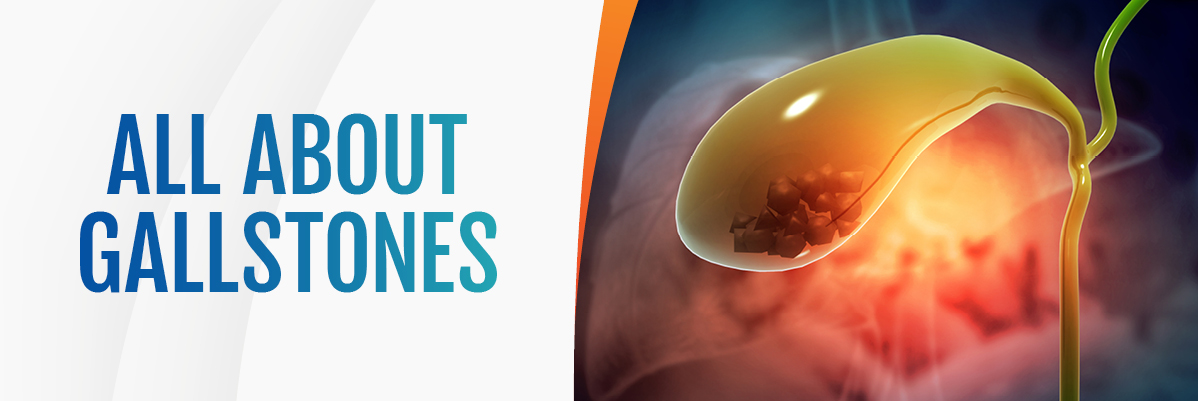
If you’ve ever had a symptomatic gallstone, this painful condition needs no introduction. For those who are unfamiliar, gallstones are hard bile deposits that occur in the gallbladder. Located beneath the liver, the gallbladder stores bile and releases it into the small intestine to help break down food. Gallstones can occur if your gallbladder doesn’t empty properly, or if your bile contains too much cholesterol or bilirubin. Gallstones are relatively common, but most people don’t know they have the condition unless it becomes symptomatic.
Gallstone Symptoms
The size and number of gallstones vary from person to person. It can range from a single gallstone to multiple gallstones, which can be as small as a speck to the size of a golf ball. Many gallstones are asymptomatic.
Gallstones usually only cause symptoms if they get stuck in the bile duct. The main symptom is sudden and severe abdominal pain felt under the ribs on the right side of the torso or in the center of the abdomen. It can also cause pain in the right shoulder or between the shoulder blades.
Rapidly intensifying pain that lasts up to several hours is the main symptom of gallstones. Other symptoms can include:
- Bloating
- Chills
- Fever
- Indigestion
- Jaundice
- Nausea and vomiting
Causes And Risk Factors For Gallstones
Gallstones are usually caused by:
- High cholesterol level in the bile. When more cholesterol than the bile can dissolve is deposited into the gallbladder from the liver, the excess cholesterol can form stones.
- Bile with high levels of bilirubin. This is usually caused by other health conditions affecting the liver.
- Problems with gallbladder emptying.
Gallstones can occur in any person, but the risk of developing gallstones increases in people who are:
- 40 years of age or older
- Female
- Native American or Hispanic
- Overweight
- Pregnant
- Not physically active
- Eating an unhealthy diet (especially high in fat and low in fiber)
- Taking estrogen
Having a family history of gallstones or certain health conditions (such as liver disease, diabetes or certain blood disorders) can also increase the risk of gallstones.
Outlook For Gallstones
In addition to being extremely painful, gallstones can cause health complications. Further issues can include blockage of the bile duct or pancreatic duct, inflammation of the gallbladder, and even gallbladder cancer. Although it is possible for gallstones to pass on their own, surgery is often required. Patients suffering from frequent gallstone attacks will also usually have their gallbladder surgically removed.
The risk of gallstones can be reduced by:
- Eating a healthy, high-fiber diet.
- Avoiding overconsumption of saturated fats.
- Maintaining or reaching a healthy weight.
- Exercising regularly.
Seeking medical help for abdominal pain or any of the aforementioned symptoms is important, especially if it is recurring. Immediate care is recommended if you develop severe pain with fever, nausea, vomiting or jaundice.
GastroIntestinal Specialists, A.M.C. is the largest independent gastroenterology group in Northwest Louisiana. Their board-certified physicians have more than 150 years of combined experience in providing quality care that you can trust. To schedule an appointment, visit www.gis.md or call (318) 631-9121.